

Is Las Vegas Running Out of Water? What Lake Mead’s Record Low Means for Moving to Las Vegas
If you’re thinking about moving to Las Vegas, Henderson or Lake Las Vegas, you may have seen the latest headlines about Lake Mead and wondered:
Is Las Vegas running out of water?
It’s a fair question.
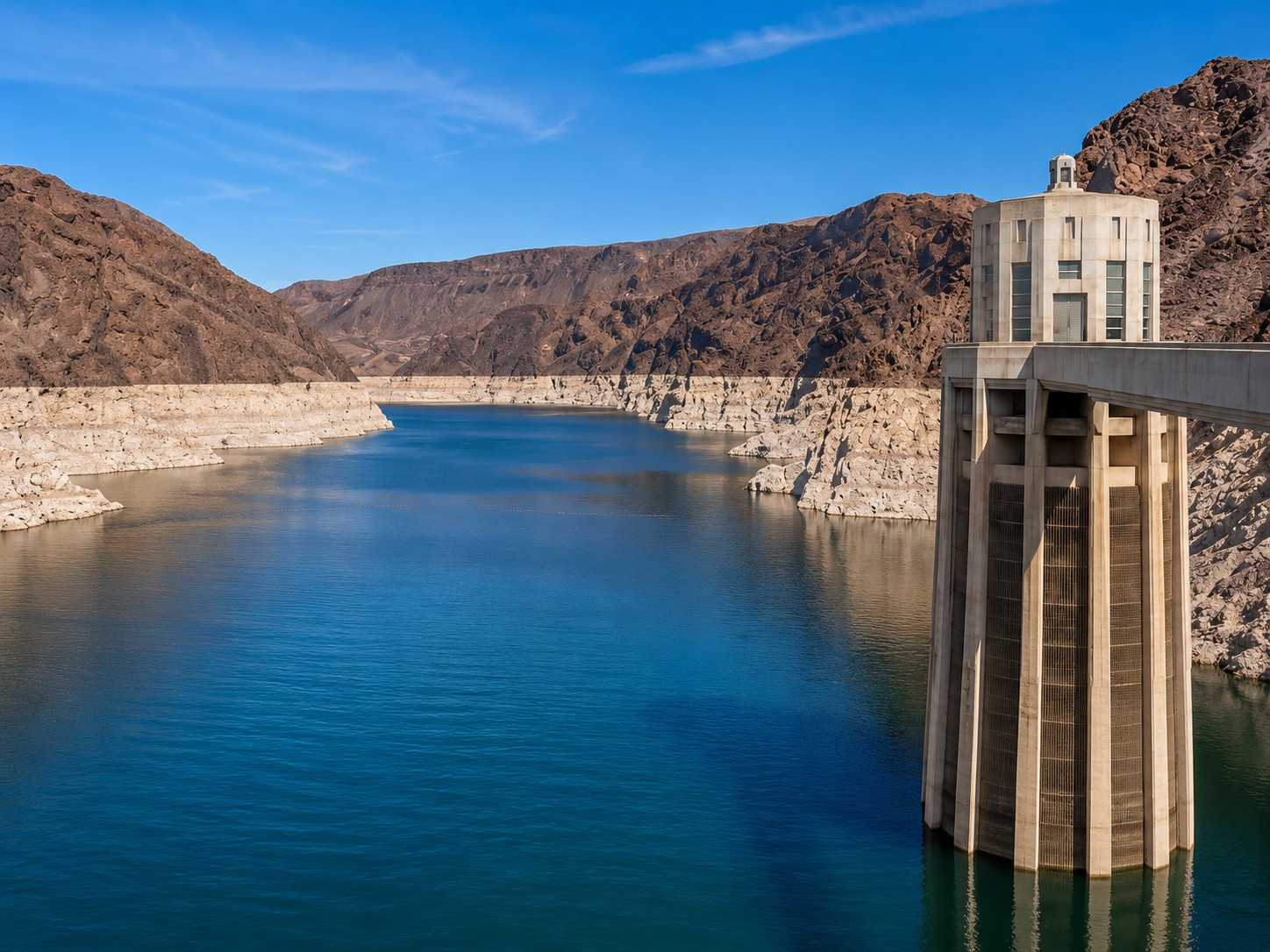
On August 7, 2026, ABC News reported that Lake Mead had fallen to a record-low elevation of 1,040.50 feet, slightly below the previous record set in July 2022.
Lake Mead’s declining water level is serious, and the Colorado River Basin faces real long-term challenges.
But there is an important part of the story that often gets lost behind dramatic photographs of Lake Mead’s famous white “bathtub ring”:
A record-low Lake Mead does not mean Las Vegas is about to run out of drinking water.
In fact, Southern Nevada has spent decades preparing for lower Lake Mead water levels, investing in water recycling, conservation, storage and infrastructure specifically designed to protect the Las Vegas Valley’s water supply.
Why Is Lake Mead So Low?
Lake Mead is the nation’s largest reservoir by storage capacity and an important part of the Colorado River system.
Years of drought, warmer temperatures and, most recently, exceptionally poor snowpack have reduced the amount of water flowing through the Colorado River system.
That deserves attention.
But when considering whether to move to Las Vegas, it’s also important to understand the difference between the water level of Lake Mead and the reliability of Southern Nevada’s drinking-water system.
They are related, but they are not the same thing.
Las Vegas Recycles Nearly All of Its Indoor Water
One of Southern Nevada’s biggest advantages is something many people considering a move here simply don’t know about.
Nearly all water used indoors in Southern Nevada is treated and recycled.
When you shower, wash clothes, run the dishwasher or use water inside your home, that water flows through the sewer system to a wastewater treatment facility.
After being highly treated, much of that water is returned through the Las Vegas Wash and ultimately back into Lake Mead.
Southern Nevada receives return-flow credits for that water.
In simple terms, every gallon returned to the Colorado River allows Southern Nevada to withdraw another gallon, as long as Nevada remains within its consumptive-use allocation.
According to the Southern Nevada Water Authority, approximately 99% of highly treated wastewater is recycled for direct or indirect reuse.
That means the same water can essentially be used, treated, returned and used again.
That is a tremendous advantage for a desert community.
The Bigger Issue Is Outdoor Water Use
Water used indoors can largely be recovered.
Water used outdoors generally cannot.
Water sprayed onto lawns and landscaping is lost primarily through evaporation or absorption into the ground.
That’s why Southern Nevada’s conservation efforts have focused heavily on outdoor water use.
Southern Nevada has implemented grass-removal programs, watering restrictions, limits on new ornamental grass, pool-size limits and other conservation measures designed to reduce water that cannot be recovered.
It may sound surprising, but Las Vegas has become one of the country’s most aggressive communities when it comes to desert water conservation.
Las Vegas Prepared for Extremely Low Lake Mead Levels
Here’s another important fact for anyone worried about moving to Las Vegas because of Lake Mead.
Southern Nevada didn’t simply hope the lake would stay full.
It engineered for the possibility that it wouldn’t.
The Southern Nevada Water Authority constructed Lake Mead Intake No. 3, which began delivering water in 2015.
It then constructed the Low Lake Level Pumping Station, completed in 2020 and placed into operation in 2022.
Together, these facilities allow Southern Nevada to access its Lake Mead water supplies at elevations down to approximately 875 feet above sea level.
Why does that number matter?
Lake Mead’s so-called “dead pool” elevation is approximately 895 feet, the point at which water could no longer pass through Hoover Dam normally to generate electricity or serve downstream users.
Southern Nevada’s system was designed to access water below that elevation.
The Low Lake Level Pumping Station can deliver as much as 900 million gallons per day to Southern Nevada water-treatment facilities.
So while seeing Lake Mead around 1,040 feet is certainly concerning from a Colorado River perspective, Southern Nevada has spent billions of dollars over the years building infrastructure specifically designed to keep drinking water available during extremely low reservoir conditions.
Southern Nevada Is Using Far Less Water Per Person
The conservation numbers may be even more impressive.
According to the Southern Nevada Water Authority, per-capita water use decreased approximately 58% between 2002 and 2025.
During that same period, Southern Nevada added approximately 876,000 residents.
Think about that for a moment.
Hundreds of thousands of people moved into Southern Nevada, yet the amount of water being used per person dropped dramatically.
That’s an important piece of the Lake Mead story that often gets overlooked.
Las Vegas has demonstrated that population growth does not have to mean proportionally higher water consumption.
Southern Nevada Uses Less Than 5% of Nevada’s Available Water
Here’s another statistic that surprises many people considering moving here.
Southern Nevada contains approximately 74% of Nevada’s population and generates roughly 70% of the state’s economic activity.
Yet Southern Nevada uses less than 5% of the water available for use in the state of Nevada, according to the Southern Nevada Water Authority.
That’s an extraordinary difference between population and water consumption.
What About All Those Las Vegas Resorts?
This is probably one of the biggest misconceptions about water in Las Vegas.
People see swimming pools, fountains, golf courses and enormous resorts and assume the Las Vegas Strip must consume most of our water.
It doesn’t.
Resorts account for approximately 7% of Southern Nevada’s community water use.
Because most hotel water is used indoors, much of it is treated and returned to Lake Mead just like water used inside residential homes.
Those giant resorts may look thirsty, but the water story behind them is much more efficient than appearances suggest.
What Is the Government Doing About Lake Mead?
The federal government and the seven Colorado River Basin states are currently working on new rules governing Lake Mead and Lake Powell after the existing operating guidelines expire at the end of 2026.
The U.S. Bureau of Reclamation released its Draft Environmental Impact Statement for post-2026 Colorado River operations in January 2026.
Several possible operating strategies are being evaluated, and a final long-term operating framework has not yet been selected.
That distinction is important because you may see headlines describing different “government plans.” Many of those plans are still proposals being considered as part of the larger negotiations.
Meanwhile, Arizona, California and Nevada have proposed a short-term Lower Basin plan designed to protect the Colorado River through 2028.
That proposal identifies more than 3.2 million acre-feet of water savings and contributions to the Colorado River system.
For 2027 and 2028, the proposal includes annual reductions of approximately:
Arizona: 760,000 acre-feet
California: 440,000 acre-feet
Nevada: 50,000 acre-feet
Those numbers are part of a proposal and are not yet the final post-2026 federal operating rules.
But they demonstrate something important:
Nevada’s overall Colorado River footprint is relatively small compared with its larger neighboring Lower Basin states.
How Does Nevada Compare With Arizona and California?
Arizona, California and Nevada all depend on the Colorado River, but their situations are very different.
Nevada
Southern Nevada has a relatively small Colorado River allocation, aggressively recycles indoor water, has dramatically reduced per-capita consumption and has built infrastructure designed to access Lake Mead even at extraordinarily low elevations.
Arizona
Arizona is heavily dependent on the Colorado River, including water transported hundreds of miles through the Central Arizona Project.
Under the current Lower Basin short-term proposal, Arizona would absorb the largest reduction of the three states.
California
California has the largest Colorado River allocation among the Lower Basin states and significant senior water rights.
California has also made substantial conservation commitments, but its overall Colorado River use is considerably larger than Nevada’s.
This does not mean Nevada is immune from Colorado River shortages.
It does mean that Southern Nevada enters this challenge with an unusually aggressive conservation program, extensive recycling and infrastructure specifically designed for low Lake Mead conditions.
So, Is Las Vegas Running Out of Water?
No, that is not an accurate way to describe the current situation.
Lake Mead is at a historically low level, and the Colorado River faces serious challenges that will require continued conservation and cooperation among seven states, Mexico, Tribal Nations and the federal government.
Southern Nevada will need to continue conserving water.
We may see additional restrictions on outdoor water use, landscaping changes, conservation requirements and adjustments in Colorado River allocations.
But that is very different from saying Las Vegas is running out of drinking water.
Southern Nevada has spent decades preparing for a drier future through:
Water recycling
Return-flow credits
Aggressive outdoor conservation
Lake Mead Intake No. 3
The Low Lake Level Pumping Station
Groundwater resources
Water banking and storage
Long-term water-resource planning
That preparation matters.
Should Lake Mead Stop You From Moving to Las Vegas?
If you’re considering moving to Las Vegas, Henderson or Lake Las Vegas, I wouldn’t ignore Lake Mead.
I would understand it.
But I also wouldn’t let a photograph of Lake Mead’s bathtub ring convince you that Southern Nevada is about to run out of water.
Look beyond the shoreline.
Look at the infrastructure.
Look at the water recycling.
Look at the conservation numbers.
Look at the dramatic reduction in per-capita water use.
And look at the decades of planning Southern Nevada has already put in place.
Lake Mead deserves our attention, but the facts tell a much bigger story about Las Vegas and its long-term water supply.
If Lake Mead or Southern Nevada’s water supply has been one of the things making you nervous about relocating here, I’m happy to help you separate the headlines from the facts.
And if you’re thinking about moving to Las Vegas, Henderson or beautiful Lake Las Vegas, let’s talk.
There are a lot of reasons so many people are choosing to make Southern Nevada home.
Vegas Rocks Real Estate
VegasRocksRealEstate.com
Sources
Southern Nevada Water Authority
U.S. Bureau of Reclamation
Colorado River Board of California
ABC News, August 7, 2026: “Lake Mead, nation’s largest reservoir, reaches its lowest water level on record”